What kind of skin booster is Rejuran?
Rejuran is a skin booster based on salmon-derived polynucleotide (PN), approved in Korea by the MFDS as a medical device.
Skin Boosters · Q26
Skin Boosters · Q27
Question: What is Juvelook and how does the treatment work?
Juvelook is a combination of PDLLA (poly-D,L-lactic acid) and hyaluronic acid (HA) made by Vaim Co., Ltd., approved in Korea by the MFDS as a tissue-repair material (Class 4 medical device). The manufacturer usually recommends 3 sessions and states intervals of about 6 weeks for Juvelook and about 8 weeks for Juvelook Volume. Redness, swelling, tenderness and bruising can occur, and PLA-based products can cause nodules or longer-lasting bumps, so these should be reviewed together with individual differences.
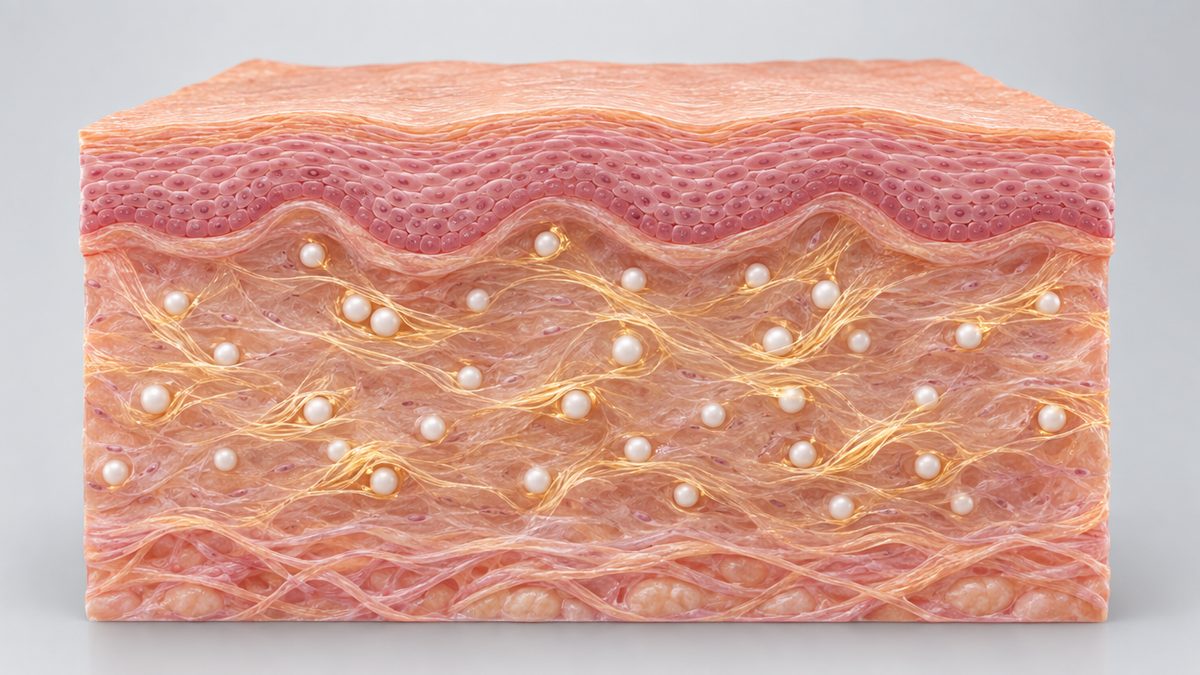
Juvelook is a combination product that mixes PDLLA (poly-D,L-lactic acid), a biodegradable polymer, with hyaluronic acid (HA).
According to the manufacturer's labeling, one vial of Juvelook contains 42.5 mg of PDLLA and 7.5 mg of HA, Juvelook Volume contains 170 mg of PDLLA and 30 mg of HA, and Juvelook i contains 25.5 mg of PDLLA and 4.5 mg of HA.
PDLLA is mainly amorphous, whereas PLLA, from the same PLA family, is semi-crystalline. For this reason, aftercare instructions for PLLA products are not applied directly to Juvelook; the product-specific instructions are followed.
| Product | Contents per vial | Interval stated by manufacturer |
|---|---|---|
| Juvelook | PDLLA 42.5 mg + HA 7.5 mg | Usually 3 sessions, about 6 weeks apart |
| Juvelook Volume | PDLLA 170 mg + HA 30 mg | Usually 3 sessions, about 8 weeks apart |
| Juvelook i | PDLLA 25.5 mg + HA 4.5 mg | Number of sessions and interval confirmed at consultation |
In Korea, Juvelook is approved by the MFDS as a medical device (item name: tissue-repair material, Class 4).
According to the MFDS medical device database, it was approved on December 21, 2017 under approval number 17-972; product names include Juvelook, Juvelook Volume and Lenisna, and the manufacturer is Vaim Co., Ltd. (as of 2026, subject to change).
CELITA Clinic offers Juvelook as one of its skin booster options, and whether to use it and which product are decided during consultation based on the area and skin condition.
The manufacturer usually recommends 3 sessions, at intervals of about 6 weeks for Juvelook and about 8 weeks for Juvelook Volume.
The manufacturer adds that the number of sessions and intervals may vary with the area, the response and the medical team's judgment, and that maintenance treatments may be recommended afterward.
If you are visiting from abroad and cannot come many times, please share the dates you can visit during consultation. CELITA Clinic designs treatment plans with the difficulty of repeat visits in mind.
The manufacturer states that temporary redness, swelling, tenderness and bruising can occur at the treated area.
The manufacturer describes downtime as generally short, with most people returning to daily life soon, but the degree and duration of reactions vary between individuals. For PLA-based products, nodules are described as the main concern when injected into the dermis, and they are known to cause bumps that can be more visible and longer-lasting than those from HA or PN.
Although rare, an expert consensus has been published on the possibility of visual impairment or blindness from intravascular injection of PDLLA-HA 200 (Juvelook Volume, Lenisna). If your vision changes or the skin at the injection site turns white or bluish after treatment, contact the clinic immediately.
PLLA fillers may come with massage instructions, but Juvelook is a PDLLA product, so those instructions are not applied as they are. Whether to massage depends on the aftercare instructions you receive after treatment.
The manufacturer states that the medical team may advise avoiding strenuous exercise, saunas, hot baths and alcohol for a short period. CELITA Clinic's general advice is to avoid these activities for 1 week.
The main ingredient of Rejuran is polynucleotide (PN), while Juvelook is based on PDLLA and HA. PN is described as usually leaving small, temporary bumps, while PLA-based products can leave longer-lasting bumps.
This article is general medical information, not a diagnosis or treatment. Results, recovery time and side effects vary with each person's skin, and whether a treatment suits you is decided after consultation with a doctor. If you notice unusual symptoms, contact the clinic that treated you right away.