How do I choose between the different types of skin boosters?
A skin booster is chosen by weighing your priority skin concerns, each ingredient's properties and bump pattern, and how often you can visit.
Skin Boosters · Q28
Skin Boosters · Q31
Question: How do the different skin booster injection methods compare?
Skin booster injection methods are described in three groups: manual injection, placed shallowly by hand with a fine needle; automated injectors, which hold the skin with suction and inject through multiple needles; and jet injectors, which deliver the product into the skin without a needle. Each method differs in control over injection points, the treatment process and limits on depth, so the method is chosen to suit the product's ingredients, the area and skin condition. With any method, temporary reactions such as redness, swelling and bruising can occur, and these vary between individuals.
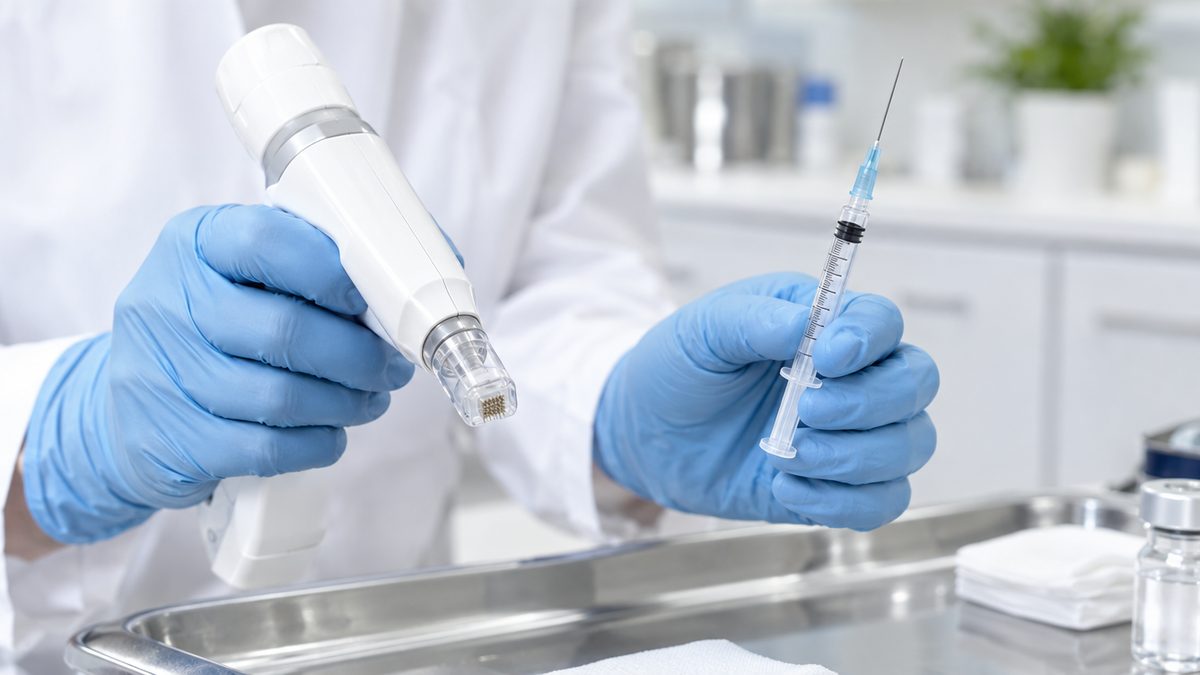
Skin booster injection methods fall into three groups: manual injection, multi-needle automated injectors and needle-free jet injectors.
A 2024 skin booster review divides injection methods into these three groups. Even with the same product, the injection depth, spacing and treatment process can differ depending on how it is delivered.
Skin boosters come in a range of ingredients, including hyaluronic acid (HA), polynucleotide (PN) and biodegradable polymers such as PDLLA, so the injection method is chosen together with the product's properties.
| Method | How it is injected | Characteristics |
|---|---|---|
| Manual injection | Injected shallowly by hand with a 33-34G fine needle | The medical team adjusts points and amount for each area |
| Automated injector | Suction holds the skin; injected through multiple needles | A machine assists the injection (e.g., REJUMATE) |
| Jet injector | Injected without a needle using laser or electromagnetic methods | No needle, but limited depth |
Manual injection is a method in which the medical team injects directly into the shallow layers of the skin with a fine 33-34G needle.
Because the medical team injects by hand, the injection points and amount can be adjusted for each area. Since the needle enters at each injection point, needle marks and small raised bumps can appear.
The review explains that non-crosslinked HA and PN usually leave small, temporary bumps, while synthetic polymers such as PLA can cause more visible, longer-lasting bumps.
Automated injectors use needles with a machine assisting the injection, while jet injectors deliver the product into the skin without a needle.
An automated injector holds the skin with suction and then injects through multiple needles; the review gives PharmaResearch's REJUMATE as an example. CELITA Clinic has an automated injection device, the X-Injector.
Needle-free jet injectors deliver the product into the skin using laser or electromagnetic methods. They are described as having pros and cons, such as not using a needle but having limits on how deep the product reaches.
The injection method is decided at consultation by looking at the product's ingredients, the treatment area and skin condition together.
Before treatment, CELITA Clinic checks skin condition with an AI skin analysis device (EVE V MUSE) and a portable ultrasound probe (Sono Finder), and after the intake consultation, the Director personally assesses you and plans the treatment.
Sedation is not provided as standard, and numbing cream is considered depending on the type of treatment. If you have a preferred method, you can raise it at consultation and decide after hearing the medical team's explanation.
Regardless of the injection method, temporary reactions such as mild redness and swelling, pain or discomfort, and occasional bruising and needle marks can occur.
The review explains that mild redness and swelling usually appear for a few hours after treatment, and treats vascular injury as rare but an important concern. Foreign-body granuloma is also described as a rare possibility.
According to CELITA Clinic's aftercare guidance, temporary bumps after a skin booster settle within 1-3 days, and you should not scratch even if it itches. The degree and duration of reactions vary between individuals.
Pain or discomfort can occur with any injection method, and how much you feel it differs from person to person. Numbing cream is considered depending on the type of treatment, which you can confirm at consultation.
At CELITA Clinic, consultation, numbing and treatment together usually take 1-2 hours, depending on the treatments and that day's schedule. On a first visit, time for the AI skin analysis and consultation is also included.
CELITA Clinic's general aftercare guidance is gentle cleansing and makeup from 2-3 hours after treatment. Avoid rubbing the treated area, and treatment-specific precautions are provided on an aftercare card.
This article is general medical information, not a diagnosis or treatment. Results, recovery time and side effects vary with each person's skin, and whether a treatment suits you is decided after consultation with a doctor. If you notice unusual symptoms, contact the clinic that treated you right away.