What kind of skin booster is Rejuran?
Rejuran is a skin booster based on salmon-derived polynucleotide (PN), approved in Korea by the MFDS as a medical device.
Skin Boosters · Q26
Skin Boosters · Q25
Question: What is a skin booster?
A skin booster is an injectable made from various biological materials and used with the aim of improving signs of skin aging such as dullness, dryness and loss of firmness. Characteristics and reactions differ by ingredient, such as hyaluronic acid (HA), polynucleotide (PN), biodegradable polymers and autologous materials. Temporary reactions such as redness, swelling and small bumps are common, and vascular complications occur rarely, so side effects and individual differences should be reviewed along with the expected effects.
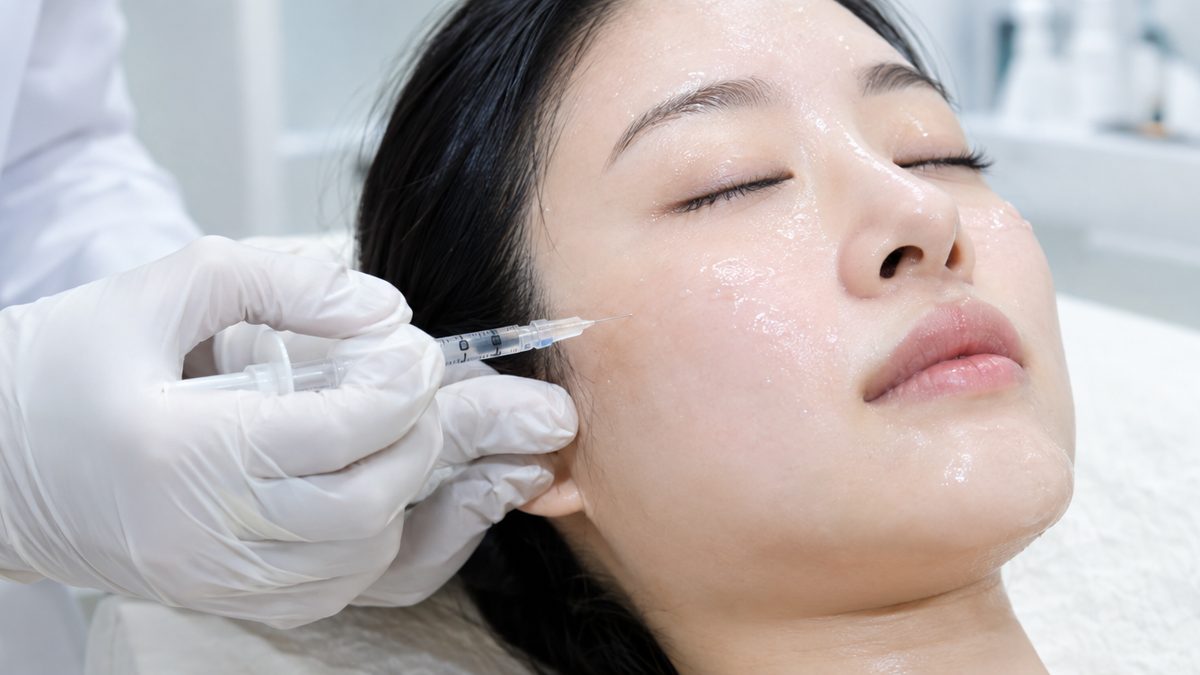
A skin booster is an injectable delivered into the skin with the aim of improving signs of aging such as dullness, dryness and loss of firmness.
A 2024 review of skin boosters (Rho 2024) defines skin boosters as injectables made from various biological materials. Unlike lifting, which raises sagging facial contours, the aim is to address the condition of the skin itself.
CELITA Clinic works with products including Rejuran Healer, Rejuran HB, Juvelook, Celliju, Olidia, Cellredm, Radiesse, GOURI, Re2O, Revive and Wiqo Uno. Which product suits you is decided during the consultation based on your skin condition and concerns.
| Group | Example ingredients | Known characteristics |
|---|---|---|
| Hyaluronic acid (HA) | Non-crosslinked HA, HA and glycerol | Increased hydration reported; non-crosslinked HA breaks down quickly |
| Polynucleotides | PN, PDRN | PN described as having high viscoelasticity and water-binding capacity |
| Biodegradable polymers | PLLA, PDLLA, PCL, PDO | Possible nodules and longer-lasting bumps |
| Autologous materials | PRP and others | Materials obtained from your own blood and similar sources |
| Combinations | PDLLA with HA and others | Composition differs by product |
Skin booster ingredients fall into groups such as hyaluronic acid (HA), polynucleotide (PN) and PDRN, biodegradable polymers, autologous materials and combinations.
Much of the research on HA skin boosters relates to hydration. A randomized study (159 people) of repeated injections of an HA and glycerol product reported increased skin hydration for up to 16 weeks, but there are also reports that non-crosslinked HA is quickly broken down by enzymes in the body, so results are inconsistent.
PN is a chain of DNA obtained from salmon or trout gonads and is the main ingredient of Rejuran, and biodegradable polymers include PLLA, PDLLA, PCL and PDO. Juvelook is a combination product mixing PDLLA and HA.
Common reactions are mild redness and swelling for a few hours after treatment, pain or discomfort, occasional bruising and needle marks.
Small raised bumps at the injection points (injection bumps) are also common. CELITA Clinic explains that temporary bumps settle within 1 to 3 days, and it is described that non-crosslinked HA and PN usually leave small, temporary bumps, while synthetic polymers such as PLA can leave bumps that are more noticeable and last longer.
Although rare, blood vessel injury is an important concern, and serious vascular events such as loss of vision and foreign body granulomas have been reported with PLA products. Injecting crosslinked HA into the dermis can cause small beads or papules.
Skin boosters are injected directly with a fine needle, with an automatic injector with multiple needles, or with a needle-free jet injector.
The review describes manual shallow injection with a fine 33 to 34G needle, multi-needle automatic injectors that hold the skin in place with suction, and needle-free jet injectors, which are limited in how deep they reach. Each has advantages and disadvantages.
CELITA Clinic has the X-Injector, an automatic injection device. The injection method and depth are decided by the medical team according to the ingredient, the area and skin condition.
It depends on the product. For example, Rejuran and Juvelook are approved by the MFDS in Korea as medical devices, not medicines (as of 2026).
Treatment follows check-in, face cleansing, AI skin analysis, a consultation with a doctor and payment, and takes about 30 minutes to 1 hour including numbing. After treatment, you receive an aftercare instruction card in your language.
Mention any allergies, bleeding disorders, recurring cold sores (lip herpes), previous cosmetic treatments, and the medicines and supplements you take. Blood-thinning medicines can increase the risk of bruising, but do not stop them on your own; discuss it with the prescribing doctor.
This article is general medical information, not a diagnosis or treatment. Results, recovery time and side effects vary with each person's skin, and whether a treatment suits you is decided after consultation with a doctor. If you notice unusual symptoms, contact the clinic that treated you right away.