What is Juvelook and how does the treatment work?
Juvelook is a skin booster that combines PDLLA and hyaluronic acid; the manufacturer usually recommends 3 sessions about 6 weeks apart.
Skin Boosters · Q27
Skin Boosters · Q26
Question: What kind of skin booster is Rejuran?
Rejuran is a polynucleotide (PN) skin booster made by PharmaResearch Co., Ltd., approved in Korea by the Ministry of Food and Drug Safety (MFDS) as a tissue-repair biomaterial (Class 4 medical device). PN consists of DNA chains obtained from salmon and trout gonads and is described as having high viscoelasticity and water-binding capacity. Small bumps, redness and swelling are common after treatment, and bruising or vascular complications can occur rarely, so these should be reviewed together with individual differences.
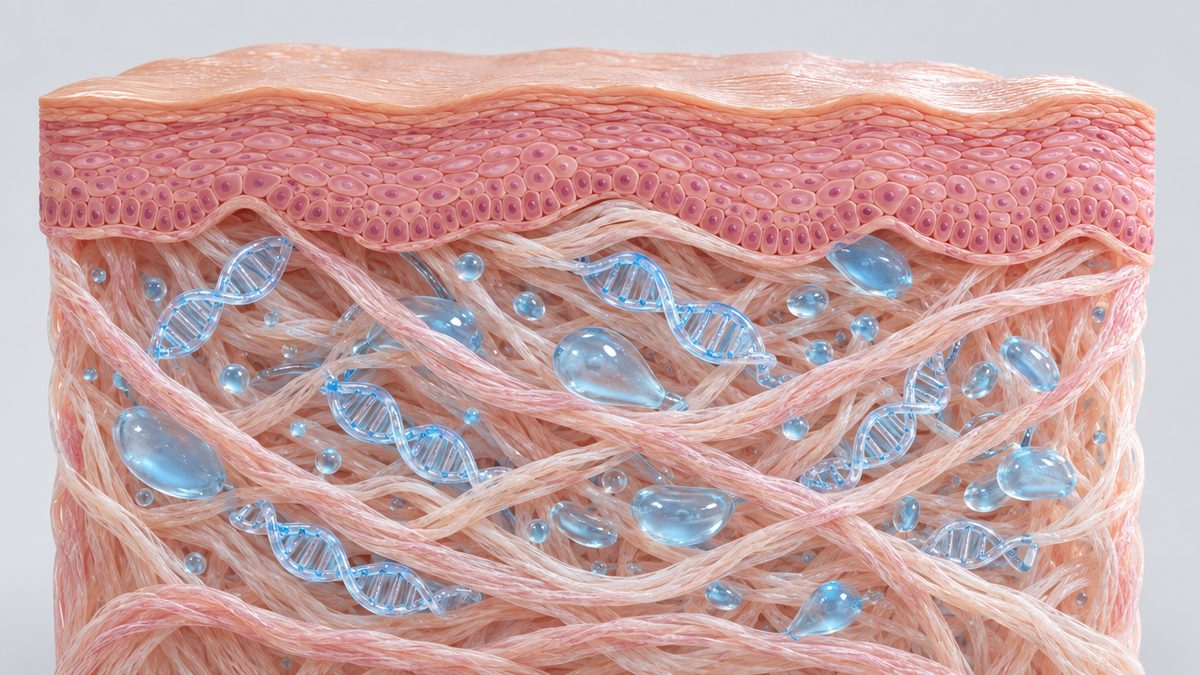
The main ingredient of Rejuran is polynucleotide (PN), a DNA component obtained from salmon germ cells.
A skin booster review (Rho 2024) describes PN as high-molecular-weight DNA chains obtained from salmon and trout gonads, with higher viscoelasticity and water-binding capacity than PDRN.
The manufacturer, PharmaResearch, calls its proprietary technology for extracting DNA from salmon germ cells and optimizing it as a regenerative material DOT (DNA Optimizing Technology). This is the manufacturer's technical description, and results vary with skin condition and the individual.
| Item | Details |
|---|---|
| Manufacturer | PharmaResearch Co., Ltd. |
| Main ingredient | Polynucleotide (PN), derived from salmon germ cells |
| MFDS approval (Korea) | Approval number 14-825, tissue-repair biomaterial, Class 4 |
| Approval date | April 9, 2014 (Rejuran HB plus: July 23, 2021) |
| Common reactions | Small bumps, redness, swelling, needle marks, occasional bruising |
In Korea, Rejuran is approved by the MFDS not as a drug but as a medical device (item name: tissue-repair biomaterial, Class 4).
According to the MFDS medical device database, Rejuran was approved on April 9, 2014 under approval number 14-825, and the product names include Rejuran, Rejuran Eye and Rejuran S. Rejuran HB plus was approved separately on July 23, 2021 under approval number 21-629 (as of 2026, subject to change).
CELITA Clinic offers Rejuran Healer and Rejuran HB, and which product to use is decided during consultation based on the area and skin condition.
PN skin boosters usually leave small, temporary bumps (injection bumps), and CELITA Clinic advises that these settle within 1-3 days.
Mild redness and swelling, pain or discomfort, and needle marks for a few hours after treatment are common, and bruising can occasionally occur. Do not scratch even if it itches, and wash your face and apply makeup gently only after 2-3 hours.
Rare complications such as vascular injury or foreign-body granuloma have been reported. If the skin at the injection site turns white or bluish, or your vision changes, contact the clinic immediately.
An official recommended interval from the manufacturer of Rejuran could not be confirmed; PN studies have used repeat treatments at 2-week intervals, and a European consensus suggests 3-week intervals.
One study injected PN into the dermis 4 times at 2-week intervals, and a European consensus suggested that after 3 sessions at 3-week intervals, results usually last 6-12 months. This varies by product and individual.
CELITA Clinic designs treatment plans with cases like overseas visitors, who find repeat visits difficult, in mind, so let us know during consultation how many times and when you can visit.
Because the ingredient is derived from salmon germ cells, you must tell us about any allergy history during consultation. Whether the treatment is suitable is decided by the medical team after reviewing your history.
The combination and order of treatments differ for each procedure, so the plan is reviewed during consultation. Telling us which treatments you want and your schedule helps in deciding the order.
When there is an important event such as a wedding, CELITA Clinic advises having a skin booster 1 month before and only soothing care in the final week. How quickly bumps and bruises fade varies between individuals.
This article is general medical information, not a diagnosis or treatment. Results, recovery time and side effects vary with each person's skin, and whether a treatment suits you is decided after consultation with a doctor. If you notice unusual symptoms, contact the clinic that treated you right away.