What is the difference between Ultherapy and Thermage?
Ultherapy is a HIFU device that focuses ultrasound at set depths; Thermage is an RF device that delivers radiofrequency energy to the skin.
Comparing Treatments · Q40
Comparing Treatments · Q41
Question: What is the difference between HIFU lifting and RF lifting?
HIFU (ultrasound) lifting concentrates ultrasound energy on a single point at a set depth beneath the skin to create small thermal coagulation points, while radiofrequency (RF) lifting delivers energy based on electrical current, not light, to the skin to generate heat. They differ only in the type of energy and how it is delivered, and studies have reported improvement in facial and neck laxity with both. Which approach suits you depends on your skin condition and concerns and is confirmed at consultation.
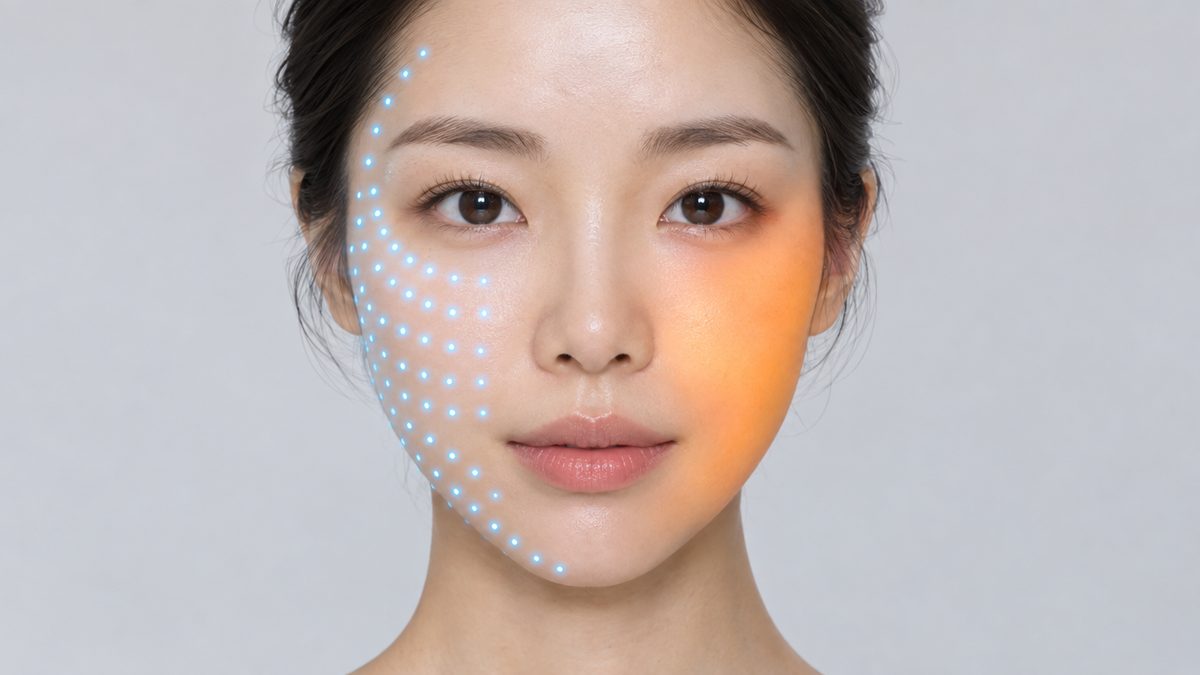
The main difference is the type of energy: HIFU lifting uses acoustic energy, and RF lifting uses radiofrequency energy based on electrical current.
Focused ultrasound (HIFU) is described as concentrating ultrasound energy on a single point at a specific depth beneath the skin to create small thermal coagulation points (TCPs) of less than 1 mm³. The temperature at the focal point briefly rises above 60°C, while the epidermis and papillary dermis in between are known to be unaffected.
Radiofrequency (RF) is a non-ablative technology that uses electrical current rather than light. The Thermage FLX manufacturer explains that the handpiece delivers radiofrequency energy to the skin, with integrated cooling and vibration, and continually adjusts energy delivery according to skin condition.
| Item | HIFU (ultrasound) | RF (radiofrequency) |
|---|---|---|
| Energy | Ultrasound (acoustic) energy | Radiofrequency energy based on electrical current |
| Delivery | Focused on a point to create thermal coagulation points | Energy delivered to the skin to heat it |
| Depth | Fixed focal depth for each transducer | Manufacturer states it is delivered to the skin |
| Common reactions | Redness, edema, bruising, tenderness | Pain, redness, swelling |
| Devices at CELITA Clinic | Ultherapy PRIME, Shurink Universe | Thermage FLX, Cellinew, Alltite |
HIFU lifting has a fixed focal depth for each transducer (cartridge), whereas for RF lifting the manufacturer only states that energy is delivered to the skin, making it hard to compare by specific depth figures.
Ultherapy PRIME has focal depths of 1.5 mm, 3.0 mm and 4.5 mm, and the Shurink Universe Face cartridges 1.5-4.5 mm. The heat from HIFU is described as contracting collagen fibers in the SMAS (superficial musculoaponeurotic system) and deep dermis and stimulating new collagen production.
Radiofrequency delivers heat to the skin rather than to a single point, and the manufacturer explains that it is designed to support collagen remodeling. The depth reached varies with the device and settings, so hearing the explanation at consultation gives the most accurate picture.
A 6-month study of 20 people treated with monopolar radiofrequency on one side of the face and microfocused ultrasound on the other reported improved facial and neck laxity with both, and no statistical difference.
The same study also reported no statistical difference between the two approaches in laxity scores or adverse reactions. However, it was a small study, so this does not mean an individual will see the same results, and results vary between individuals.
Non-surgical devices also have limits. The literature explains that HIFU is suited to mild to moderate laxity, and that surgery should be considered for severe laxity or prominent neck bands.
Temporary redness and swelling are common with both approaches, and side effects such as burns have rarely been reported.
In a HIFU meta-analysis, the common adverse reactions were redness, edema, swelling, bruising and tenderness, reported as generally mild to moderate. Moderate pain during treatment has been reported, with large individual differences.
According to Thermage FLX manufacturer safety information, the most common effect during treatment is mild to moderate pain, and after treatment, redness usually subsides within 24 hours and swelling usually within 5 days, though it can last up to several weeks. Burns, blisters or scabs, and numbness or tingling have also rarely been reported.
Among CELITA Clinic's lifting devices, Ultherapy PRIME and Shurink Universe use ultrasound, while Thermage FLX, Cellinew and Alltite use radiofrequency.
Onda lifting is a separate approach that uses microwaves rather than ultrasound or radiofrequency. The choice of device depends more on skin firmness, the area and the results you want than on the approach itself.
Before treatment, skin condition is checked with an AI skin analysis device (EVE V MUSE) and a portable ultrasound probe (Sono Finder), and the Director assesses you one-on-one and explains the suitable approach and recovery period.
The combination and order of treatments differ for each procedure, so the plan is reviewed during consultation. Whether they can be done on the same day depends on your skin condition and recovery schedule.
CELITA Clinic does not provide sedation as standard, and numbing cream is considered depending on the type of treatment. The medical team will explain ways to reduce discomfort.
One way is to check skin firmness, the size of the area and the results you hope for, together with objective data such as AI measurements, and then hear the explanation at consultation. Narrowing your concerns to 2-3 makes planning easier.
This article is general medical information, not a diagnosis or treatment. Results, recovery time and side effects vary with each person's skin, and whether a treatment suits you is decided after consultation with a doctor. If you notice unusual symptoms, contact the clinic that treated you right away.