What are the side effects of lifting treatments?
Redness, swelling, bruising and tenderness are common after lifting; burns and nerve symptoms have rarely been reported.
Safety & Aftercare · Q48
Safety & Aftercare · Q49
Question: How should I care for my skin at home after treatment?
The basics of home care after treatment are 3 steps: gentle cleansing, moisturizer applied 3 times thicker than usual, and sunscreen even indoors. CELITA Clinic also advises avoiding alcohol, smoking, saunas, swimming and strenuous exercise for 1 week and not rubbing the treated area. Recovery speed varies between individuals, so also check the aftercare card for the treatment you received.
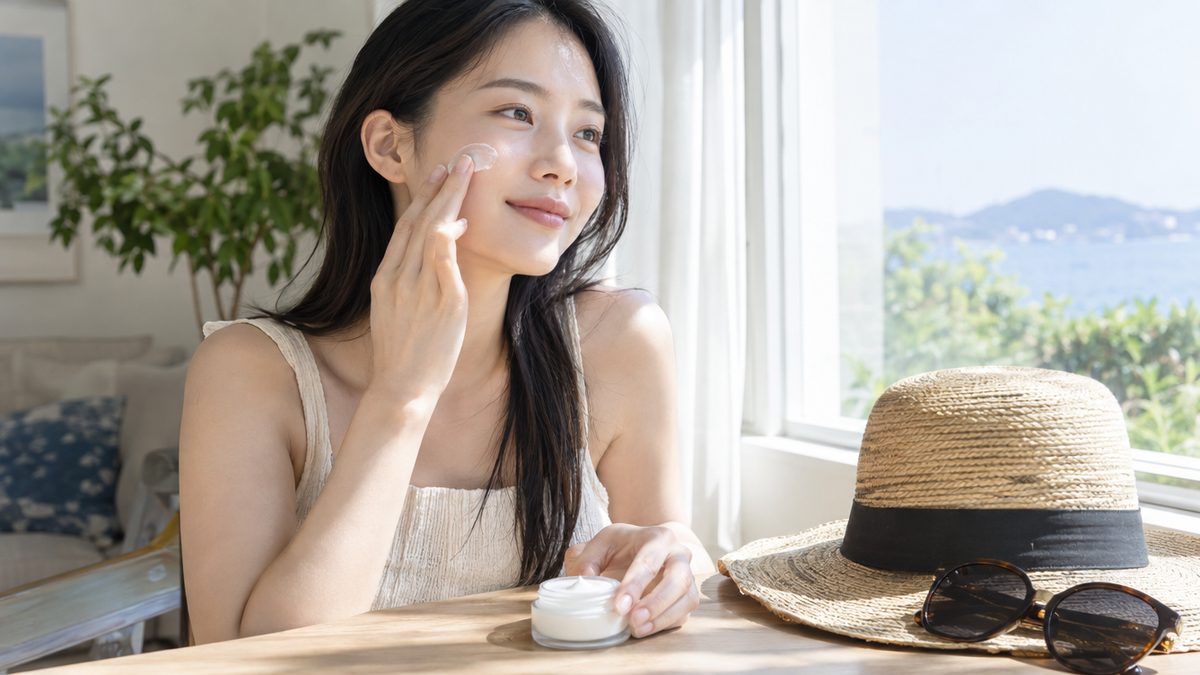
The basics of home care recommended by CELITA Clinic are a 3-step defense: gentle cleansing, moisturizer applied 3 times thicker than usual and sunscreen even indoors.
Skin can be temporarily red or sensitive after treatment, so care focuses on protecting the skin rather than rubbing or irritating it. Do not rub the treated area.
Gentle cleansing and makeup are fine from 2-3 hours after treatment. Guidance may differ by treatment, so also check the aftercare card you received.
A broad-spectrum sunscreen that protects against both UVA and UVB, with SPF 30 or higher and water resistance, is recommended.
The American Academy of Dermatology (AAD) advises applying sunscreen about 15 minutes before going out, reapplying every 2 hours outdoors, and reapplying right after swimming or sweating. A water-resistant label means protection lasts for 40 or 80 minutes.
CELITA Clinic advises applying sunscreen even indoors. If your skin is sensitive right after treatment, spread it on gently rather than rubbing it in.
For 1 week after treatment, you are advised to avoid alcohol, smoking, saunas, swimming and strenuous exercise.
After a thread lift, avoid opening your mouth wide or laughing broadly for 2 weeks. Small dimple-like indentations are explained as becoming natural as swelling goes down.
Temporary bumps after a skin booster settle within 1-3 days. Do not scratch even if it itches; how long the bumps take to settle varies between individuals.
For ordinary bruises, applying an ice pack wrapped in a cloth for about 10-20 minutes at a time, repeated over the first 1-2 days, is recommended; do not put ice directly on the skin.
This method is for ordinary bruises, so first check the guidance for your treatment before applying it to the treated area. Be careful not to press hard on or rub the treated area.
Ordinary bruises usually improve within 2-3 weeks; if a bruise has not gone after 3 weeks, see a doctor. If swelling, tingling or skin color changes last longer than expected, contact the clinic.
After treatment, the basics are cleansing and moisturizing with low-irritation products. If you are not sure whether your usual products are irritating, check with the medical team at consultation.
CELITA Clinic provides aftercare instructions in English, Chinese, Japanese and other languages, so you can follow the same guidance after returning home. Send any questions through the messaging channel you used to book, such as WhatsApp.
Home care helps protect your skin but cannot prevent all side effects. The degree and duration of reactions such as swelling and bruising vary between individuals.
This article is general medical information, not a diagnosis or treatment. Results, recovery time and side effects vary with each person's skin, and whether a treatment suits you is decided after consultation with a doctor. If you notice unusual symptoms, contact the clinic that treated you right away.