How does HIFU (ultrasound) lifting work?
HIFU (ultrasound) lifting is a non-invasive treatment that focuses ultrasound energy at set depths beneath the skin to create tiny thermal coagulation points.
Understanding Lifting · Q8
Understanding Lifting · Q16
Question: How is a thread lift different from device-based lifting?
A thread lift is a minimally invasive treatment in which absorbable barbed threads are placed beneath the skin to lift tissue mechanically, while device-based lifting is a non-invasive treatment that uses ultrasound, radiofrequency or microwave energy to induce changes in collagen. A thread lift shows a change right after treatment, but swelling and bruising are reported more often, and data on long-term effects are still limited. CELITA Clinic offers MINT and APTOS thread lifts, and the method that suits you is determined during the consultation.
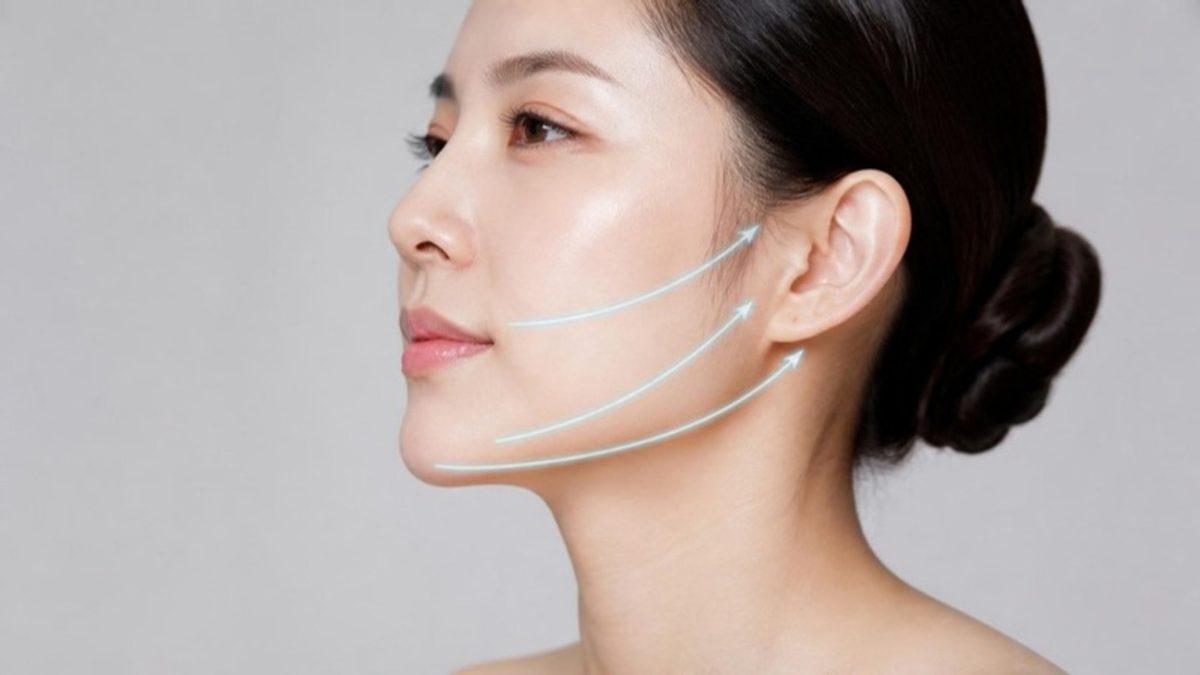
A thread lift is a minimally invasive treatment in which absorbable barbed sutures are placed beneath the skin to mechanically lift tissue in the face and neck.
The American Society of Plastic Surgeons explains that the threads lift the tissue where they are placed while also stimulating collagen production. The absorbable thread most evaluated in research is PDO (polydioxanone), followed by the PLLA and PCL types.
Absorption times by material have been reported as about 6 to 8 months for PDO, about 12 months for PLLA and about 1 to 1.5 years for PCL, and figures may differ between sources.
| Item | Thread lift | Device-based lifting |
|---|---|---|
| Method | Minimally invasive, absorbable threads inserted | Non-invasive, energy delivered |
| Action | Mechanically lifts tissue, stimulates collagen | Induces collagen change with heat |
| When results appear | Right after treatment | Over several months |
| Common reactions | Swelling, bruising, asymmetry | Redness, swelling, bruising, tenderness |
| Offered at CELITA Clinic | MINT, APTOS | Ultherapy PRIME, Thermage FLX, Onda, Shurink Universe and others |
The main difference is that a thread lift physically pulls tissue, whereas device-based lifting uses heat energy to induce changes in collagen.
HIFU (ultrasound) lifting creates thermal coagulation points at specific depths beneath the skin, radiofrequency (RF) uses electrical current, and Onda uses 2.45 GHz microwaves. Device-based lifting is non-invasive and does not puncture the skin, and its results appear over several months as new collagen forms.
Research concluded that a thread lift shows results right after treatment, but also noted that data on long-term effects are limited. Because the two methods work differently, rather than saying one is superior, the choice is made according to the degree of sagging and your recovery schedule.
Common side effects of thread lifts are swelling, bruising and facial asymmetry; most are temporary, but some may need treatment.
A meta-analysis of 26 studies (2,827 people) reported edema in 34%, bruising in 26%, visible or palpable threads in 10% and skin dimpling in 7%. Another meta-analysis reported a higher risk of complications with non-absorbable threads and in people aged 50 or older.
Infection, thread extrusion, contour irregularities, damage to blood vessels or glands, and inflammatory reactions may not resolve on their own and may need treatment. Complications such as infection, granuloma, thread migration and nerve injury are rare but have been reported.
Studies report that after a thread lift, edema generally settled within 2 to 4 weeks and bruising within 1 to 3 weeks, so recovery is planned with more time than for device-based lifting.
CELITA Clinic's thread lift aftercare instructions advise not opening the mouth wide or laughing broadly for 2 weeks, and explain that dimple-like indentations become natural as the swelling goes down. Papers explain that early swelling can hide skin dimpling, so checking progress 1 to 2 days after treatment is important.
CELITA Clinic's official FAQ recommends that, if you are traveling, treatments that can cause bruising or swelling such as a thread lift be done on the last day of your trip. Recovery varies from person to person and is explained during the consultation.
According to CELITA Clinic's guidance, thread lift results usually last 6 months to 1 year, with an additional effect from collagen production. How long results last varies with skin condition and the type of thread.
CELITA Clinic does not perform thread lifts or fillers on anyone under 19 (international age). Device-based lifting such as Onda lifting can be discussed with consent from a parent or guardian.
How treatments are combined and in what order differs by treatment, so the plan is reviewed during the consultation. The schedule is set considering the recovery period of each treatment.
This article is general medical information, not a diagnosis or treatment. Results, recovery time and side effects vary with each person's skin, and whether a treatment suits you is decided after consultation with a doctor. If you notice unusual symptoms, contact the clinic that treated you right away.