How long does swelling last after lifting, and how can I reduce it?
How long swelling lasts after lifting depends on the treatment; it is managed by not rubbing the area and avoiding alcohol and saunas for 1 week.
Lifting Downtime & Care · Q18
Lifting Downtime & Care · Q19
Question: What should I do if I get a bruise after a lifting treatment?
Bruising is one of the common reactions after lifting; in Ulthera studies occasional bruising settled within 2 days to 2 weeks, and in thread lift studies it generally settled within 1 to 3 weeks. Usual care is to apply a cloth-wrapped cold pack for the first 1 to 2 days and not to rub the treated area. Ordinary bruises usually improve within 2 to 3 weeks, and if a bruise has not gone after 3 weeks or the skin color changes unusually, contact the clinic.
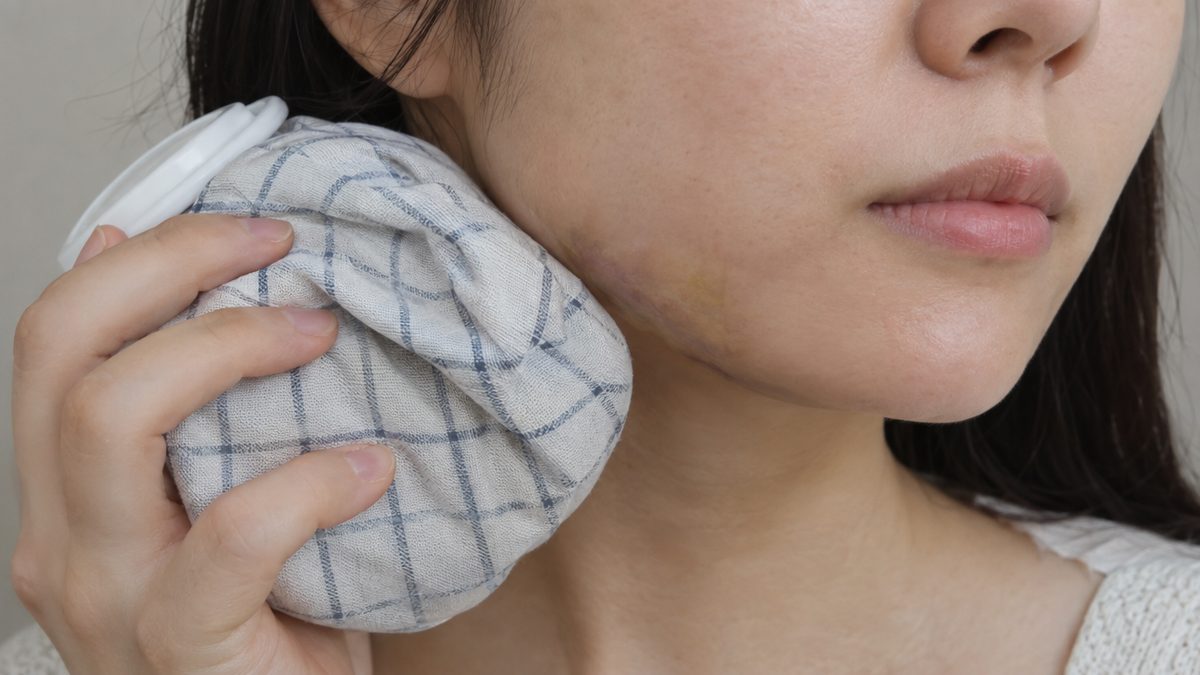
Bruising after lifting depends on the treatment and was reported to settle within 2 days to 2 weeks for Ulthera and generally within 1 to 3 weeks for thread lifts.
In a HIFU meta-analysis, bruising was reported as a common adverse reaction along with redness, edema and tenderness, and it was generally mild to moderate. A thread lift meta-analysis reported bruising in 26%.
The UK NHS advises that ordinary bruises usually get better within 2 to 3 weeks. Duration varies from person to person.
For a bruise, the usual advice is to repeatedly apply a cloth-wrapped ice pack for about 10 to 20 minutes at a time during the first 1 to 2 days.
It is important not to put ice directly on the skin, and this method is the NHS advice for ordinary bruises. Depending on the type of treatment, the medical team's advice on whether and how long to use a cold compress comes first.
Following CELITA Clinic's general aftercare instructions, do not rub the treated area, and avoid alcohol, smoking, saunas and strenuous exercise for 1 week. Light makeup is possible from 2 to 3 hours after treatment.
Mention all the medicines and supplements you usually take and any bleeding-related medical history before treatment.
The American Academy of Dermatology explains that some blood-thinning medicines increase the risk of bleeding and bruising after injection treatments, and that aspirin, unless prescribed, can make bruising worse. Warfarin, ibuprofen, vitamin E, and garlic and ginger supplements are also listed as things to mention.
It is safer not to stop any medicine on your own but to discuss it with the prescribing doctor and the medical team.
If a bruise has not gone after 3 weeks, or if the skin turns white or bluish and the pain gets worse, contact the clinic right away.
After injection treatments, skin turning pale, a net-like red mottled pattern, or dark red or bluish discoloration can, though rarely, be a sign of a blood vessel problem, so prompt checking is described as important. Changes in vision or unusual pain are also symptoms that need immediate medical attention.
You can contact CELITA Clinic through the main number, 051-928-0409, or the messenger channel you used to book.
The common reactions listed in the Thermage manufacturer's safety information are redness and swelling. Rarely, lumps or nodules under the skin can appear, mainly in the neck area, and they are described as usually resolving within 1 to 2 weeks.
CELITA Clinic's official FAQ recommends having treatments that can cause bruising or swelling, such as fillers and thread lifts, on the last day of your trip. If you share your departure schedule during the consultation, the plan will take it into account.
According to CELITA Clinic's general guidance, light makeup is possible from 2 to 3 hours after treatment. Take care not to rub the treated area hard.
This article is general medical information, not a diagnosis or treatment. Results, recovery time and side effects vary with each person's skin, and whether a treatment suits you is decided after consultation with a doctor. If you notice unusual symptoms, contact the clinic that treated you right away.